

Introduction
If you’ve ever struggled with harsh glare from sunlight reflecting off water, roads, or snow, you may have wondered: what is polarized sunglasses and how do they work? These anti-glare sunglasses are specially designed eyewear that reduces glare and enhances visual clarity, making them a popular choice for outdoor enthusiasts and everyday users alike. Ready to upgrade? Check out our Polarized Sunglass – Clear Vision & UV Protection, available now in Bangladesh.
In this comprehensive guide, we’ll break down everything you need to know about polarized sunglasses, including how they work, their benefits, and whether they are worth buying.
What Is Polarized Sunglasses?
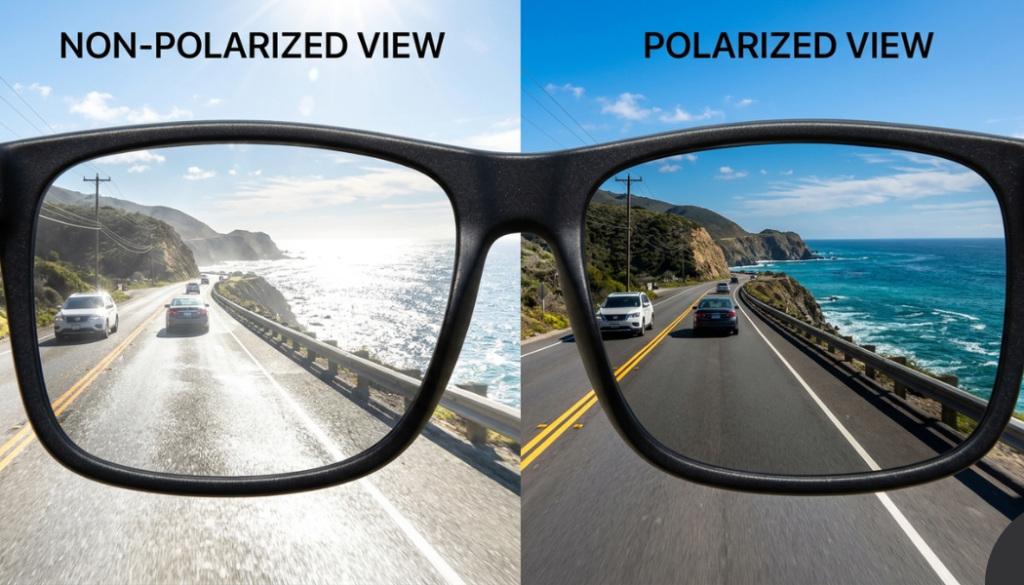
Polarized lenses are specially designed optical lenses that contain a special chemical filter designed to block intense reflected light, commonly known as glare. Unlike regular sunglasses, which simply reduce brightness, polarized lenses improve visibility by eliminating horizontal light waves that cause visual discomfort.
Glare typically occurs when sunlight reflects off flat surfaces like water, glass, or pavement. This reflected light travels horizontally and can be extremely intense, making it difficult to see clearly. Polarized lenses are engineered to block these horizontal rays while allowing vertical light to pass through, resulting in sharper and more comfortable vision.
How Do Polarized Sunglasses Work?
To understand how polarized lenses work, it helps to know how light behaves. Sunlight scatters in all directions, but when it reflects off a flat surface, it becomes polarized—meaning it travels in a more uniform horizontal direction.
Polarized lenses have a vertical filter embedded within them that blocks these horizontal light waves. Here’s how it works:
- Unpolarized light: Vibrates in multiple directions
- Reflected glare: Travels horizontally
- Polarized lenses: Block horizontal waves, letting only vertical light pass
This filtering effect significantly reduces glare and enhances contrast, making objects appear clearer and more defined.
According to the American Academy of Ophthalmology, polarized lenses reduce glare and eyestrain, which improves vision and safety outdoors — though it’s worth noting that polarization alone doesn’t guarantee UV protection, so always check that your sunglasses also offer 100% UV protection.
Link “American Academy of Ophthalmology”
Benefits of Polarized Lenses
1. Reduced Glare
The biggest advantage of anti-glare sunglasses is their ability to eliminate glare. Whether you’re driving on a sunny day or relaxing at the beach, reduced glare improves comfort and safety.
2. Improved Visual Clarity
Polarized lenses enhance contrast and color perception, allowing you to see details more clearly. This is especially useful for activities like fishing, skiing, and cycling.
3. Less Eye Strain
By minimizing harsh light, polarized sunglasses reduce eye fatigue, making them ideal for long hours outdoors.
4. Better Safety
Clearer vision means better reaction times while driving or engaging in sports, reducing the risk of accidents.
5. True Color Perception
Unlike some tinted lenses, polarized sunglasses maintain natural colors while filtering out excessive brightness.
💡 Experience these benefits yourself our Premium Tortoise Square Sunglasses – Polarized Lens combines all five benefits in one stylish frame, perfect for Bangladesh’s sunny weather.

Polarized vs Non-Polarized Sunglasses
| Feature | Polarized Lenses / Anti-Glare Sunglasses | Non-Polarized Sunglasses |
| Glare Reduction | Excellent | Minimal |
| Visual Clarity | High | Moderate |
| Eye Comfort | Superior | Basic |
| Price | Slightly Higher | Usually Cheaper |
| Best For | Outdoor activities, driving | General use |
While non-polarized sunglasses can protect your eyes from UV rays, they don’t provide the same level of glare reduction and visual comfort.
Who Should Use Polarized Lenses?
Polarized sunglasses are ideal for:
- Drivers – Reduce road glare for safer driving
- Fishermen & Boaters – See beneath water surfaces
- Athletes – Enhance performance in bright conditions
- Travelers – Improve comfort in sunny environments
- Everyday Users – Anyone seeking better eye protection
Whether you’re a daily commuter or weekend traveler, find your perfect match in our full Polarized Sunglasses collection.
Are There Any Disadvantages?
Although polarized sunglasses offer many benefits, there are a few minor drawbacks:
- Difficulty viewing LCD screens (like phones or dashboards at certain angles)
- Slightly higher cost compared to regular sunglasses
- Not always ideal for pilots, as they can interfere with instrument visibility
Because they may reduce visibility of certain instruments, especially digital displays. However, for most users, the benefits still far outweigh these minor limitations.
How to Tell If Sunglasses Are Polarized
Here are a few simple ways to check:
- Look at a reflective surface – Tilt your head; if glare changes, they are polarized eyewear
- Use a digital screen – Rotate the glasses; the screen may darken
- Check the label – Most brands clearly mark polarized lenses
Tips for Choosing the Best Polarized Sunglasses
- UV Protection: Ensure 100% UV400 protection
- Lens Color: Gray for general use, brown for contrast, green for balance
- Frame Fit: Comfortable and secure fit for your face
- Build Quality: Durable materials for long-term use
- Brand Reputation: Trusted brands often ensure better lens technology
🕶️ Ready to Buy Polarized Sunglasses in Bangladesh?
Don’t settle for cheap, unprotected lenses. Shop Mignon’s collection of polarized sunglasses UV400 protected, stylish, and built for Bangladesh’s bright sun.
👉 Shop Polarized Sunglasses Now
Conclusion
So, what is polarized sunglasses? In simple terms, they are advanced eyewear designed to reduce glare, improve clarity, and protect your eyes from harmful sunlight. Whether you’re driving, fishing, or just enjoying a sunny day, polarized sunglasses can make a significant difference in your visual comfort and safety.
Investing in a good pair of polarized sunglasses is not just about style it’s about enhancing your vision and protecting your eyes for the long run.
[…] অনেকেই Night Vision Sunglasses এবং Polarized Sunglasses-কে একই মনে করেন। কিন্তু বাস্তবে এই দুই ধরনের লেন্সের কাজ ও ব্যবহারের ক্ষেত্র একেবারেই ভিন্ন। Polarized Sunglasses কী, কীভাবে কাজ করে, এর সুবিধা-অসুবিধা এবং কার জন্য উপযুক্ত এসব বিষয়ে বিস্তারিত জানতে Polarized Sunglasses Guide পড়ুন। […]
[…] Eye care নিয়ে সম্পূর্ণ গাইড। রোদ, স্ক্রিন ও ধুলোবালি থেকে চোখ রক্ষার সহজ উপায় জানুন এবং সঠিক সানগ্লাস বেছে নিন। […]